Holding back the wave of wallabies
There is no argument that wallabies are cute, but in Aotearoa New Zealand they are a serious threat to our natural environment and economy. These stealthy marsupials have established large populations in both the North and South Islands where regional councils play a leading role in their management.
An expensive problem
Wallabies were introduced to Aotearoa NZ more than a century ago and have since established wild populations in the Bay of Plenty, Waikato, Canterbury, Otago and Auckland (on Kawau Island) regions. Without natural predators, their numbers have grown steadily, and they now occupy more than 200,000 hectares of land in the North Island and 1.5 million hectares in the South Island.
Wallabies damage native forests by browsing seedlings and understorey plants, they slow forest regeneration, compete with livestock for pasture and damage young trees in commercial forests. Once wallabies establish in new areas, they are difficult and expensive to remove. Deploying specialist biosecurity teams to control wallabies is a no-brainer because left to their own devices, it is estimated that wallaby populations would occupy one-third of the country by 2065 and create damage costing $84 million every year.
Wallabies are active at night, difficult to detect during the day and have no respect for property or regional boundaries. To meet this pest control challenge, councils, mana whenua, landowners and Department of Conservation teams coordinate their wallaby work programmes and resources.
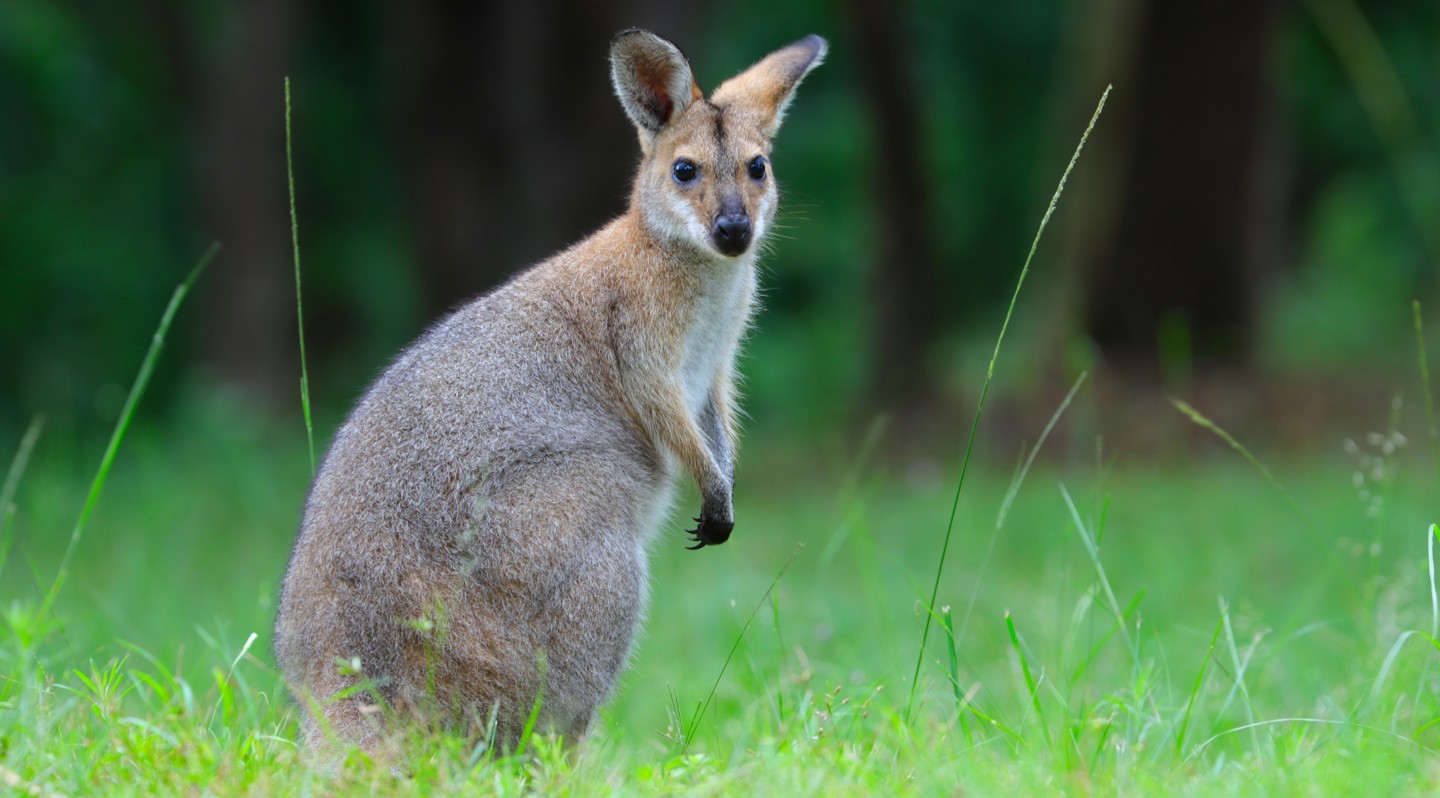
Despite being very cute, wallabies are a serious biosecurity threat. Image: Anthony Rae.
Critical control by regional councils
Biosecurity experts from regional and unitary councils in Auckland, Waikato, Bay of Plenty, Canterbury and Otago work closely together within the Tipu Mātoro Wallaby Eradication Programme, with funding from Biosecurity New Zealand and regional rates.
These cross-council teams are skilled at the hard work required to monitor and control wallabies in a strategic and impactful way. They work seamlessly together to plan across boundaries, coordinate surveillance, share contractors and best-practise methods.
The wallaby control teams use drone surveys, detection dogs, night shooting, large scale use of vertebrate toxic agents and the construction of strategic fences to manage wallaby populations. From July 2024 to June 2025, wallaby teams undertook control work on 340,000 hectares across the North and South Islands, with hunters and surveillance operators covering 49,000km on foot.
In the North Island, Waikato Regional Council and Bay of Plenty Regional Council are focussed on working in buffer zones around Rotorua to contain wallabies and stop their spread into new areas.
In the South Island, Environment Canterbury is leading the installation of a 51km wallaby-exclusion fence to protect the Mackenzie Basin, alongside a major aerial control programme to minimise spread of existing populations. Otago Regional Council has undertaken coordinated search operations to detect and remove small, isolated populations before they become established.
The success of these efforts is thanks to the local expertise of council staff and the partnerships they have with people in their communities. They are building the know-how and momentum to safeguard our environment and economy from wallabies in the long-term.
A wallaby-free future?
The long-term goal of the national Tipu Mātoro programme is a wallaby-free Aotearoa. Achieving this will depend on continued regional delivery, strong partnerships with mana whenua, landowners and DOC, and sustained national investment. As wallaby numbers are gradually brought under control, regional coordination will be critical for surveillance and response.
The case of wallabies shows that pests don’t stick to boundaries, and neither can biosecurity efforts. Regional-scale delivery allows Aotearoa New Zealand to act early, share expertise, and protect native ecosystems and productive land more effectively and more efficiently than isolated local action ever could.
More about wallabies from our Regional Councils:
We need to talk about wallabies – Waikato Regional Council
Holding the line on wallabies – Waikato Regional Council
Tipu Mātoro Central North Island Wallaby Programme – Bay of Plenty Regional Council
Containment for conservation: stopping the spread of wallabies – Bay of Plenty Regional Council
Meet Toby, pest detective – Otago Regional Council